
Restoring Proper Circulation and Pool Equipment Performance
Pool pumps are one of the most important components of any swimming pool system. The pump is responsible for circulating water through the filtration system, helping maintain water clarity, chemical balance, and overall pool health. In Arizona, extreme temperatures, long operating hours, dust, and hard water conditions can place additional strain on pool pumps throughout the year.
When a pool pump begins failing, circulation problems can quickly lead to cloudy water, algae growth, filtration issues, and additional stress on nearby equipment. Professional pool pump repair services help diagnose pump problems early before complete equipment failure occurs. Many homeowners throughout Chandler, Gilbert, Mesa, Tempe, Queen Creek, and Apache Junction rely on professional repair companies to keep their pool systems operating efficiently year-round.
Navigate This Guide:
What Is Included in Pool Pump Repair Service?
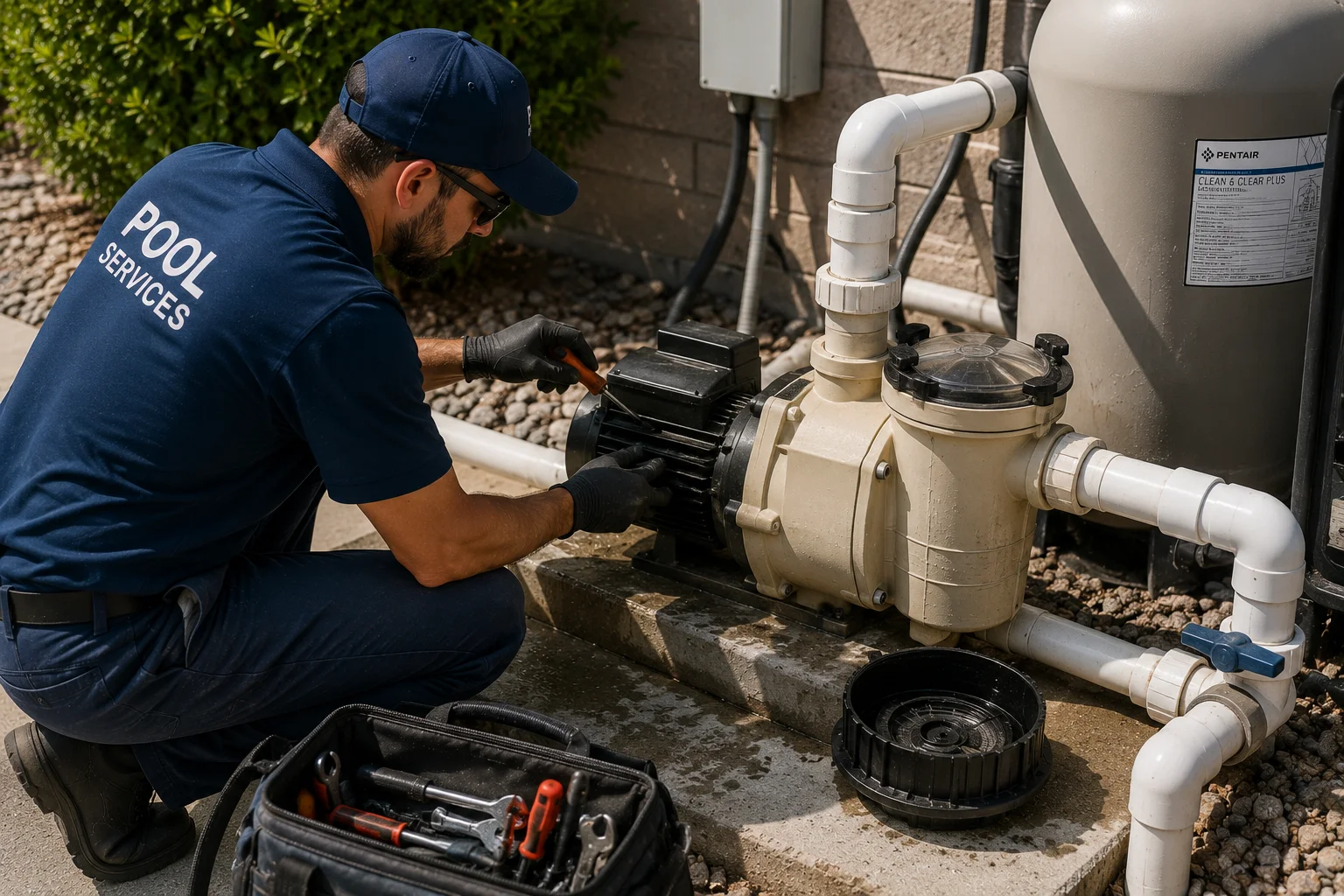
Professional pool pump repair service involves diagnosing circulation issues, repairing damaged components, and restoring proper water flow throughout the pool system.
Common pool pump repair services may include:
- Diagnosing pump motor problems
- Replacing worn seals and gaskets
- Repairing leaking pump housings
- Clearing clogged impellers
- Replacing damaged capacitors
- Troubleshooting electrical issues
- Repairing noisy or vibrating pumps
- Restoring water circulation and pressure
- Inspecting nearby valves and plumbing connections
Repair services may vary depending on the age, condition, and type of pool pump installed.
Professional East Valley Pool Pump Repair Companies
Browse East Valley pool companies specializing in pool acid washing, stain removal, algae cleanup, and restoring discolored or neglected pool surfaces.
Find Recommended Pool Companies Near You
Common Signs Your Pool Pump Needs Repair
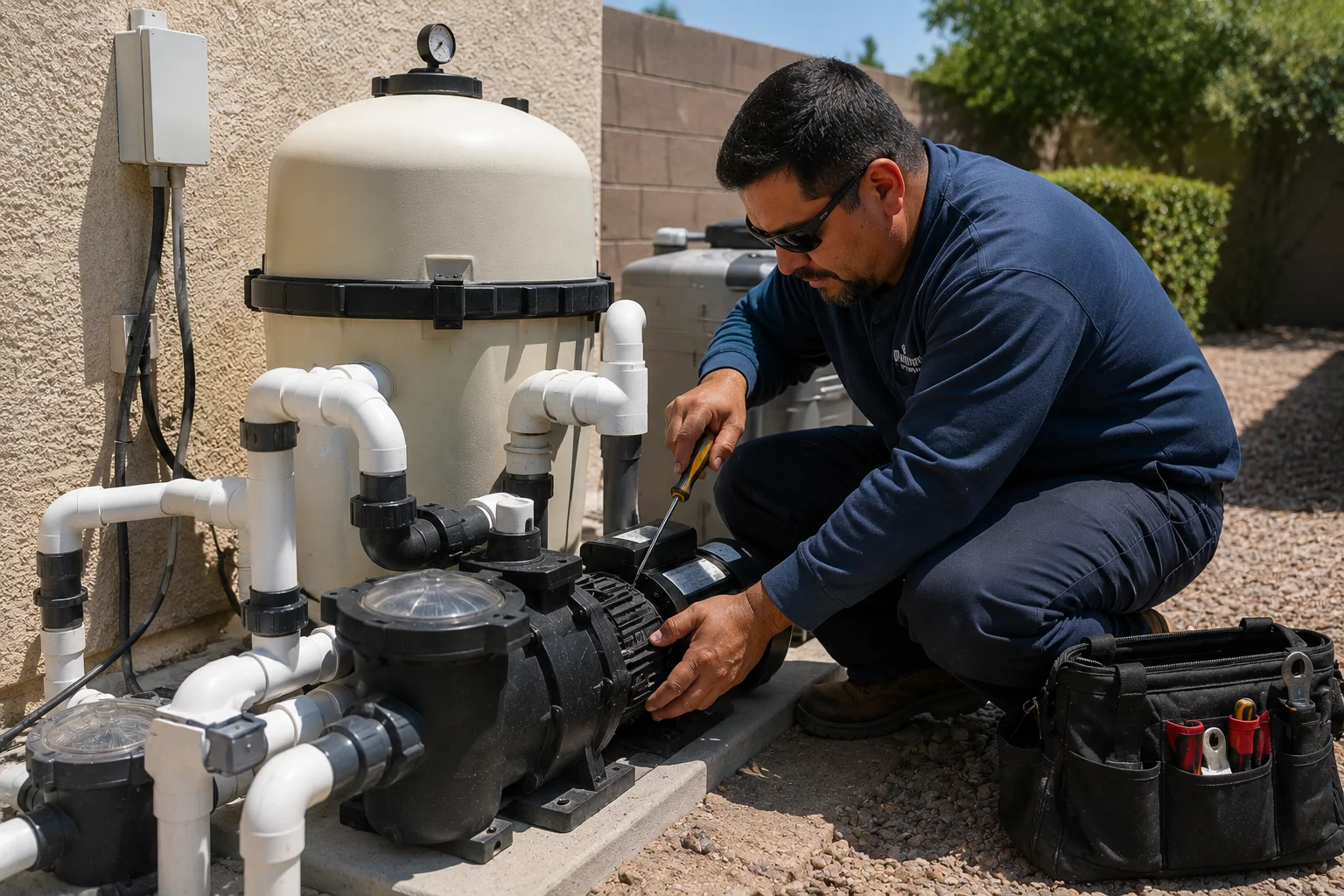
Pool pumps often show warning signs before they stop working completely. Identifying these symptoms early may help reduce repair costs and prevent additional equipment damage.
Common signs of pool pump problems include:
- Loud grinding or humming noises
- Weak water circulation
- Air bubbles in return lines
- Pump leaking water
- Pump failing to start
- Low water pressure
- Overheating equipment
- Pump shutting off unexpectedly
- Reduced filtration performance
Ignoring pump problems can eventually lead to motor failure, circulation loss, and poor water quality.
Why Pool Pump Problems Are Common in Arizona
Arizona pool pumps often run longer than pumps in cooler climates due to year-round pool use and extreme summer temperatures. Continuous operation during hot weather can increase wear on motors, seals, bearings, and internal components over time.
Dust storms, debris, hard water buildup, and clogged filtration systems may also place additional stress on circulation equipment throughout the East Valley.
Benefits of Professional Pool Pump Repair
Professional pump repair helps restore circulation while reducing additional strain on the overall pool system. Early repairs may also help prevent more expensive equipment replacement.
Benefits of professional pool pump repair may include:
- Improved water circulation
- Better filtration performance
- Reduced algae growth
- Lower strain on pool equipment
- Improved energy efficiency
- Reduced risk of complete pump failure
- Longer equipment lifespan
- Improved water clarity and balance
Professional diagnostics may also identify nearby plumbing or filtration problems affecting pump performance.
DIY vs Professional Pool Pump Repair
Some pool owners attempt basic troubleshooting when circulation problems first appear. Cleaning baskets, checking breakers, or removing visible debris may occasionally resolve minor issues. However, many pump repairs involve electrical systems, pressure components, seals, and internal motor parts that require specialized tools and experience.
Professional pool repair companies can safely diagnose circulation problems while identifying the root cause of pump failure before additional damage occurs.
Pool Pump Repair FAQ’s
Grinding, humming, or rattling noises may indicate worn bearings, clogged impellers, motor problems, or internal damage.
Yes. Poor circulation can reduce filtration performance and create water quality problems.
Leaks may develop from worn seals, cracked housings, damaged fittings, or loose plumbing connections.
Pool pump lifespan varies depending on maintenance, operating conditions, and exposure to Arizona heat.
Minor problems may be repairable, while older or heavily damaged pumps may require replacement depending on overall condition.
When to Call a Pool Pump Repair Company
If your pool pump becomes noisy, leaks water, struggles to circulate properly, or stops operating altogether, professional repair service may help restore system performance before larger equipment problems develop. Early repairs can improve circulation, protect filtration systems, and reduce the risk of costly breakdowns during Arizona’s hottest months.
Browse recommended East Valley pool companies specializing in pool pump repair, circulation diagnostics, leak troubleshooting, motor repair, and professional pool equipment services.